

Our Story
Our Story
From seed to vine.
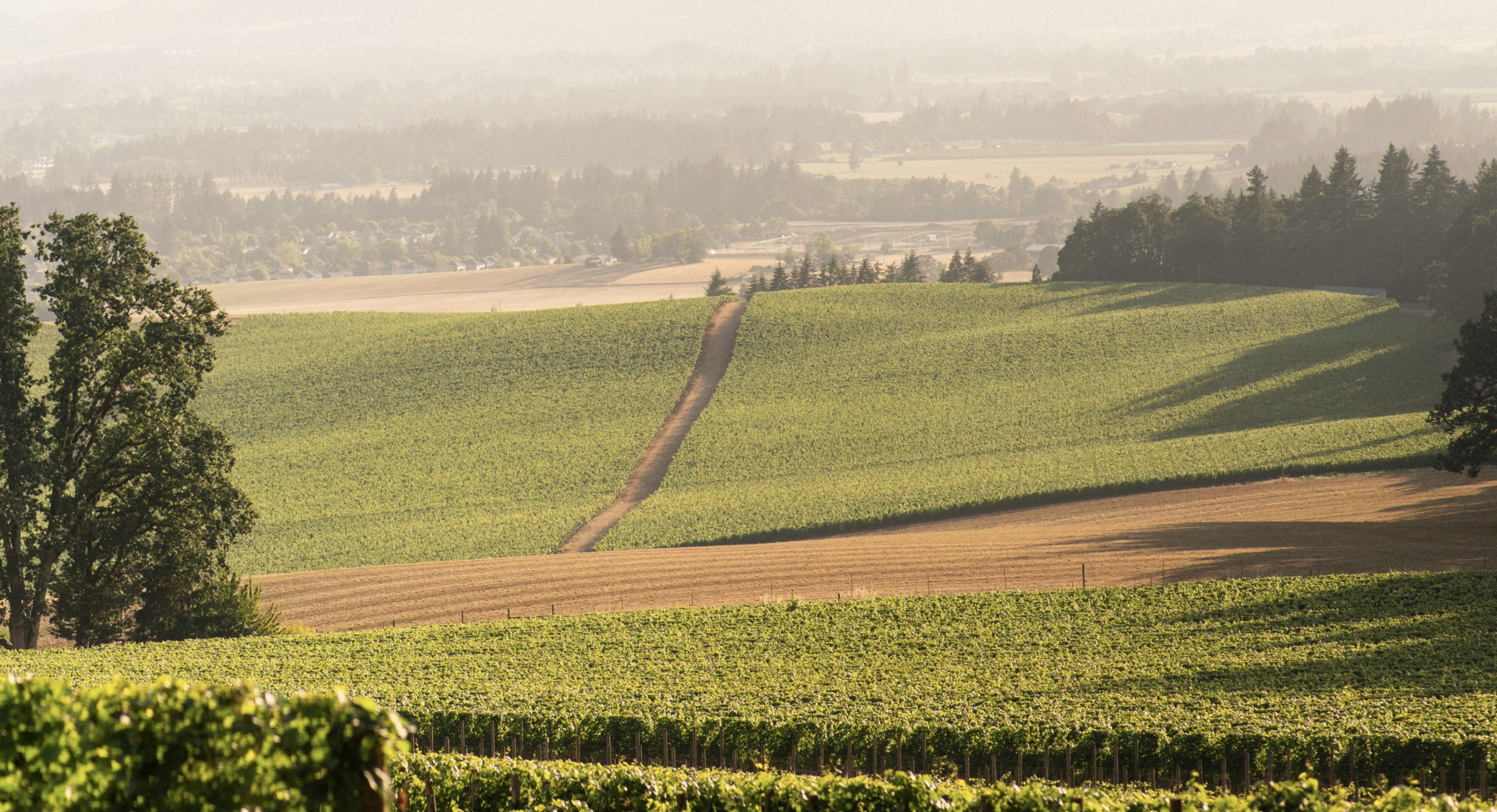
Established in 2019, Domaine Lumineux produces award-winning wines from a single Dundee Hills vineyard, with a tasting room in historic Downtown Newberg.

It’s All In The Soil
Our wines are crafted from fruit cultivated on a 42-acre LIVE-certified sustainable vineyard, first planted in 1997 less than a mile from Oregon’s oldest Pinot Noir vines. Ranging in elevation from 670 to 870 feet, the site benefits from relatively high elevation and cool, late-ripening growing conditions ideal for our varietals and clones.
Pinot Noir was first planted in the Dundee Hills in 1965, and the region has since become recognized as one of the world’s premier places for the variety.
Coppola Legacy
Before film, Francis Ford Coppola was known as “Science,” a reflection of his early fascination with engineering and experimentation. That same curiosity continues to shape Domaine Lumineux, where wine is approached as both an art and a system of interconnected elements.
Domaine Lumineux
Within every bottle of Domaine Lumineux lies a microcosm – a bottled universe, an assemblage of elements, a symphony conducted by nature. This symphony of individual elements are interacting at every step of the process, shaping the vineyard and the wines we craft from seed to vine to glass to palate.
Our wines celebrate the countless intersections of nature and science. It’s an ongoing process of careful observation, focus on the details and the pursuit of something wondrous.
Our focus begins in the Dundee Hills, where the fruit is grown. Sharp focus on the site allows us to not only showcase the traits of the appellation, but celebrate the diversity within the rows. It’s a matter of scale and we keep things small, affording more attention to the seemingly little things, from specific vineyard blocks and clones to individual barrels. We make wines meant to magnify the very best of variables like vintage, varietal and vineyard.
The fruit that arrives on the crush pad is the product of meticulous, year-round farming. Our task is to carry it gently towards wine without losing sight of its unique identity. That means few inputs and a soft guiding hand, from gentle extractions and pressings early to minimal new oak during aging. Winemaker Dave Petterson is after truly reflective wines, opting for symbiosis over a specific style. Empirical, experimental and adaptive, our winemaking practice ensures that the details of a particular year always end up in the glass.
We aim to protect the individuality at play in the vineyard, making wines from block to block. Preserving these distinctions allows for more quality and permutations down the line, whether we’re making a single-clone Pinot Noir or fine-tuning a blend. The blueprint for the wines starts with great fruit. We build accordingly, with care and a minimal mindset so as to not alter the unique and natural personality. The objective is to end up with everything that went into the wine in the first place—the essence of the vineyard.
A vintage begins well before harvest, when the vines just begin to wake up from winter. Similarly, winemaking extends well beyond just harvest. We shadow the wines throughout the entirety of their evolution, appreciative of the impact so many subtle things can combine to create. That means celebrating even the imperceptible, like the microorganisms in the soil or the wild yeast that kicks off a fermentation. Our love for wine is subatomic.
Winemaking
Our wines celebrate the countless intersections of nature and science. It’s an ongoing process of careful observation, focus on the details and the pursuit of something wondrous.
As an estate-only affair, we focus solely on our Dundee Hills vineyard. Putting our site in sharp focus allows us to not only showcase the traits of the appellation, but celebrate the diversity within our rows. It’s a matter of scale and we keep things small, affording more attention to the seemingly little things, from specific vineyard blocks and clones to individual barrels. We make wines meant to magnify the very best of variables like vintage, varietal and vineyard.
The fruit that arrives on the crush pad is the product of meticulous, year round farming. Our task is to carry it gently towards wine without losing sight of its unique identity. That means few inputs and a soft guiding hand, from gentle extractions and pressings early to minimal new oak during aging. Winemaker Dave Petterson is after truly reflective wines, opting for symbiosis over a specific style. Empirical, experimental and adaptive, our winemaking practice ensures that the details of a particular year always end up in the glass.
We work to protect the individuality at play in the vineyard, making wines from block to block. Preserving these distinctions allows for more quality and permutations down the line, whether we’re making a single-clone Pinot Noir or fine-tuning a blend. The blueprint for the wines is born in the vineyard. We build accordingly, with care and a minimal mindset so as to not alter the unique and natural personality. The objective is to end up with everything that went into the wine in the first place—the essence of the vineyard.
A vintage begins well before harvest, when the vines just begin to wake up from winter. Similarly, winemaking extends well beyond just harvest. We shadow the wines throughout the entirety of their evolution, appreciative of the impact so many subtle things can combine to create. That means celebrating even the imperceptible, like the microorganisms in our soil or the wild yeast that kicks off a fermentation. Our love for wine is subatomic.
Vineyard
Our grapes have always come from the same vineyard, rooted in ancient soils in the heart of the historic Dundee Hills. Located just up the road from the Willamette Valley’s first planting of Pinot Noir, the site occupies some of the most suitable conditions cooler-climate varietals could ask for. The combination of mineral-rich volcanic soils, an even microclimate and a higher-elevation setting make it one of just a few of places on the planet that meet Pinot Noir’s long list of demands.
Some 12,000 years ago, this site stood above a vast lake triggered by the Missoula Floods. This colossal series submerged valley floors from western Montana all the way to the Pacific Ocean. The Dundee Hills and their coveted red soils were spared, set above the flood line. This iron-clad dirt, born from age-old lava flows and known for both its exceptional drainage and water retention, would help spawn an entire industry.
The original plantings at the top of the hill reach an elevation of 870 feet, with views of the rugged Cascades to the east. The younger plantings steer west on an evergreen-framed slope that overlooks the Coastal Range. Resident grapes benefit from ample biodiversity, from strands of native oak and cover crop to bobcats and red-tailed hawks. LIVE (Low Input Viticulture and Enology) certified and Salmon Safe, the vineyard adheres to an internationally-recognized sustainability program.
Agriculturally, less is more. We prioritize restraint in farming so as not to not hide the personality of the fruit. That means minimal intervention in the form of inputs and irrigation and no fertilizers. When intervention is required, it’s done by hand, from pruning and thinning to harvesting individual clusters. While the yields are low, the caliber of the fruit is remarkable.
The Coppola Family
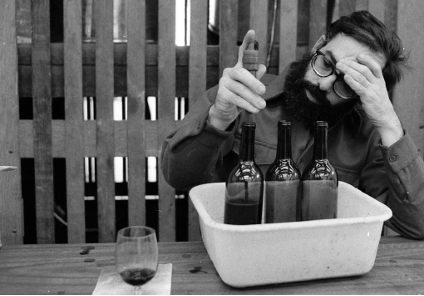
Before Francis Ford Coppola was known as a filmmaker, he was called Science. That was his title growing up, a testament to his wandering mind and fascination with engineering and technology. While his grandfather fermented wine in homemade vats in the family’s New York basement, Francis would dream up theories, devise inventions and gain a love for the inner workings of all things.
That curiosity ultimately brought Francis to the wine industry. After carving out a very successful role in film, he turned to the Napa Valley. He came upon the Inglenook property in 1975 and soon began turning the lauded estate’s 100-acre vineyard into family wines. He would go on to acquire another select northern California property, turning out a variety of wines along the way, from Bordeaux blends to sparkling.
Francis had gone from a kid who was occasionally treated to a splash of wine in his 7UP to industry entrepreneur. His innovative and unpredictable character served him well in wine, a field that’s well-captioned by the same pair of adjectives. Here, Francis could scratch his scientific itch and dabble in the many hidden variables of wine culture.
The Coppola family ventured into the Oregon wine business in 2019 naming it Domaine de Broglie, later changing to Domaine Lumineux in 2023. It marks a continuation of Francis’s unwavering interest in art and authenticity. Our production is intentionally small, affording Francis and his team the ability to give the wines the attention they deserve.
Dave Petterson, Winemaker
After having lived and studied in four countries and three U.S. states during his early years, Winemaker Dave Petterson moved to Oregon for graduate school, earning his Master of Science in Cartography Geographic Information Systems and sparking his interest in the Willamette Valley’s unique soil geology made so fertile by the Ice Age Missoula Floods.
He eventually met his wife Emily, whose family owned Panther Creek Cellars at the time, where he began to help working harvests in the cellar and ultimately joined their winemaking team full-time as Assistant Winemaker in 2003. In 2007, Dave met the McClintock family, owners of Vista Hills Vineyard. He began making wine from their estate and serving as the General Manager as they grew from a vineyard to a winery featuring a new wine label, tasting room, wine club, and wholesale program.
The Family Coppola purchased the former Vista Hills property in 2018, keeping Dave as the General Manager/Winemaker for Domaine Lumineux. His deep knowledge of the vineyard and hands-on, artisanal approach supports our philosophy that winemaking is a form of art, blending nature, science, and creativity in every bottle.
Sustainability
Domaine Lumineux’s wines are sourced from LIVE (Low Input Viticulture and Enology) certified vineyards, signifying adherence to rigorous standards designed to minimize environmental impact as we move towards a more sustainable future.
The farming practices emphasize regenerative techniques, including strategic cover crop planting to reduce atmospheric carbon and oak habitat preservation, ensuring the long-term health of the land. By nurturing ecologically rich areas throughout the vineyard, biodiversity is encouraged and soil health maintained, minimizing the need for intervention and fostering a vibrant ecosystem teeming with diverse microorganisms, flora, and fauna.
Those practices also work to protect local water systems, maintain forested areas, and provide safe wildlife corridors and bird habitats.
The core principle of LIVE, ‘Low Input’ is exactly our philosophy. Rather than maximizing yields or pushing rapid growth, the focus remains on balanced vines, moderate yields, and slow ripening fruit. This approach reduces the need for pesticides or fertilizers that can interfere with natural growth processes, favoring hands-on techniques such as pruning, trellis management, and soil stewardship.
Dry farming also encourages healthy plant competition and conserves water resources in response to lower water availability and changing climates. This dry farming technique not only benefits the environment but also produces terroir-driven wines.
Beyond supporting environmental stewardship, we provide fair wages, healthcare, and safe working conditions for all, aiming to foster genuine equity within the wine community.
Our Newberg tasting room also serves as a drop off location for natural cork recycling. Through a partnership with the organization, ReCork, we ensure that natural cork is repurposed into sustainable materials, further reducing our environmental footprint.
